FUNDAMENTALS
The Turing Principle: A Fundamental of Modern Computing
Discover the Turing Principle, the fundamental concept behind modern computing
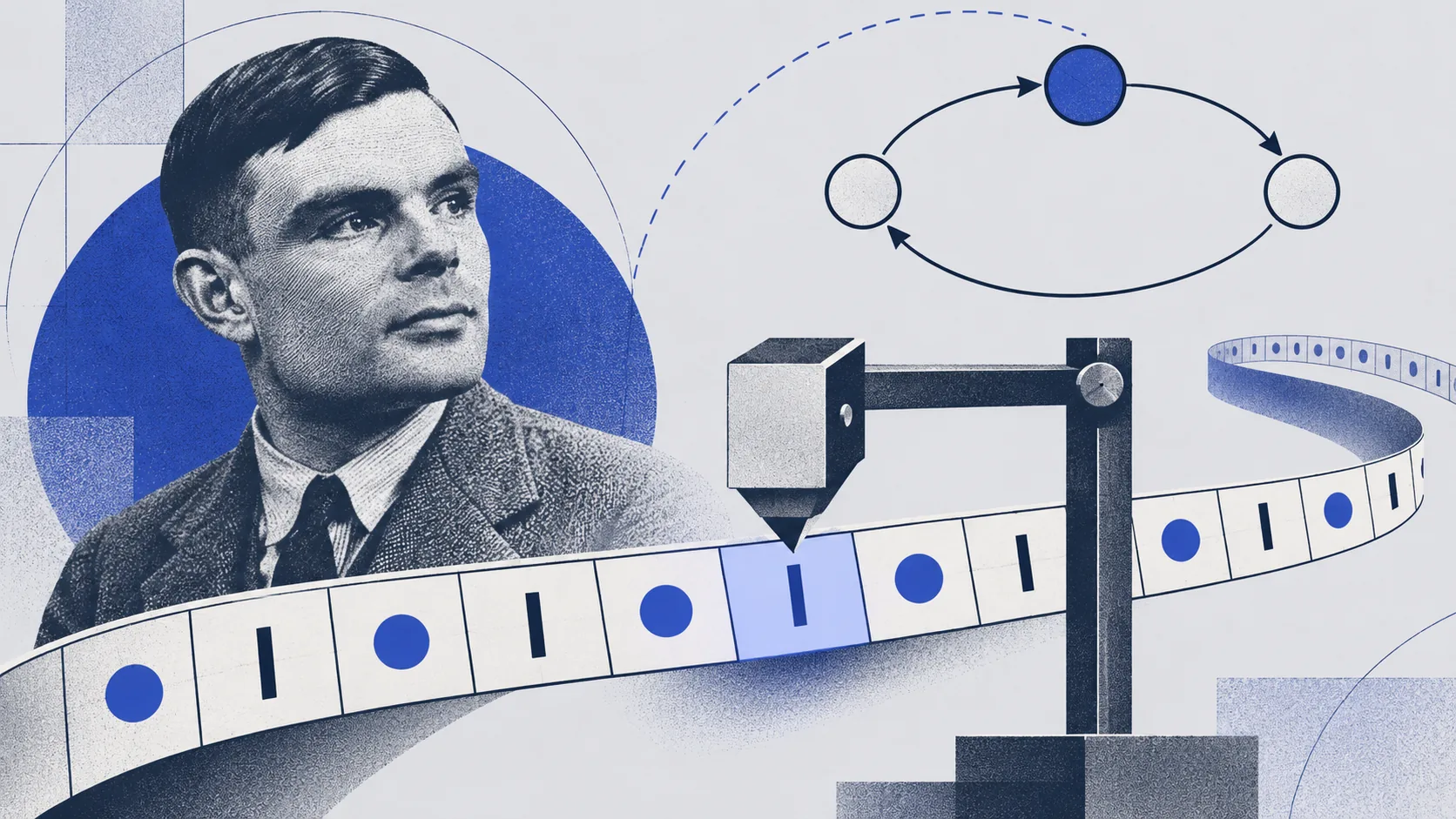
There are concepts which, although coming from a distant era, continue to define our modern world. Among them, the Turing principle occupies an essential place. It’s a revolutionary idea, both simple and elegant, that underpins everything we think of as computing today.
But what is Turing’s principle? Who is at the origin? Why was it formulated and how is it still used today? Let’s dive into the fascinating world of this concept.
What is Turing’s principle?
The Turing principle is based on a central concept: any logical or computational operation can be simulated by a universal machine capable of executing a finite set of instructions. This principle is the cornerstone of what we today call computers.
The basis of this principle is embodied by the Turing Machine, a theoretical model designed to manipulate symbols on an infinite ribbon according to a set of rules. Although it is an abstract model, it is powerful enough to describe any program or calculation that a machine can perform.
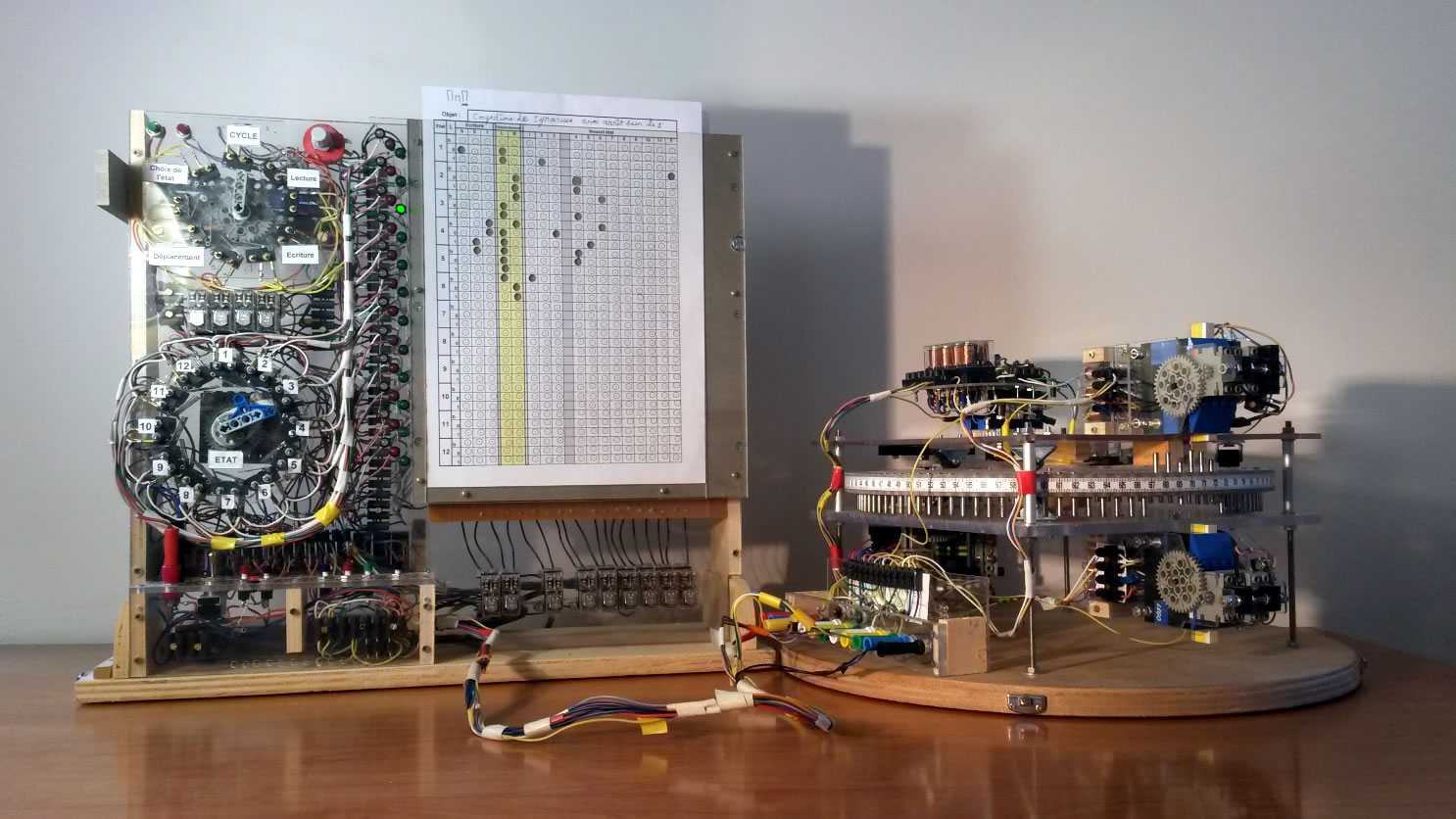
A Turing machine
What is the spirit behind this principle?
The Turing principle was invented by British mathematician Alan Turing (1912–1954), one of the most brilliant minds of the 20th century. Turing published his idea in a paper titled “On Computable Numbers, with an Application to the Entscheidungsproblem” in 1936.
In this document, Turing responded to a question asked by the mathematician David Hilbert: is there a mechanical process allowing all mathematical questions to be resolved? Turing’s answer, provided by his theoretical machine, is both a yes (for feasible calculations) and a no (certain questions are not calculable). This result laid the foundations of the theory of computability.
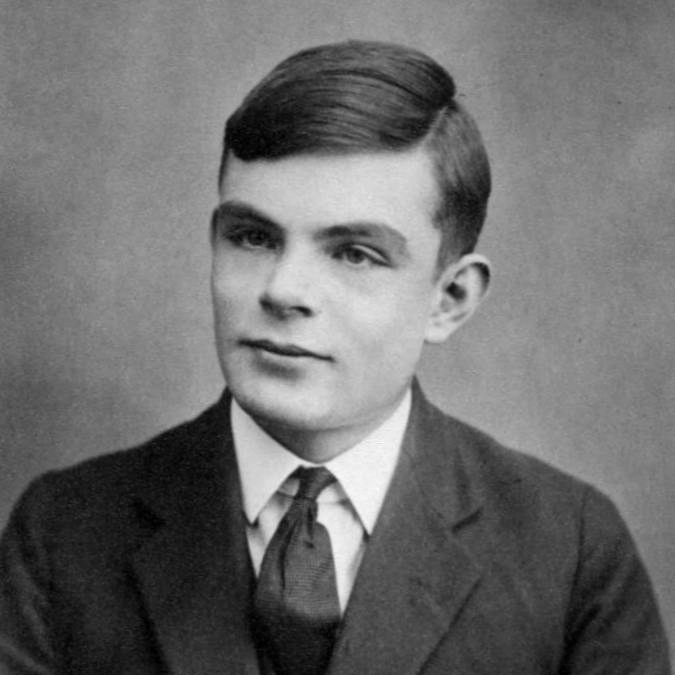
Alan Turing
Why was the Turing principle invented?
Turing’s principle was designed to answer fundamental questions in logic and mathematics:
-
Explore the limits of mechanical calculations: Before modern computers, calculations were performed manually or using simple mechanical devices. Turing wanted to formalize what could be accomplished by machines.
-
Solve the decision problem: Hilbert’s “Entscheidungsproblem” sought to know whether a mechanical method could determine whether a mathematical proposition was true or false.
-
Understand the nature of calculations: The theoretical model of the Turing machine made it possible to define the notion of algorithm and mechanical procedure.
When and how is the Turing principle used?
When is it used?
The Turing Principle is everywhere, even if you don’t realize it. It is used whenever a program or software is designed, executed or optimized. Here are some examples:
-
In the design of programming languages: Modern programming languages like Python, Java or C++ are based on the algorithm concepts defined by Turing.
-
In the creation of processors: CPU architectures are based on principles similar to those of the Turing machine.
-
In artificial intelligence: Machine learning systems use algorithms that arise from Turing’s ideas.
How is it used?
-
Theory: Researchers use the Turing machine to study the limits of what computers can calculate.
-
Practical: Developers create algorithms that rely on concepts inspired by Turing.
-
Education: The Turing principle is taught in introductory computer science courses to understand the basics of programming and systems.
For what purposes is the Turing principle applied?
Turing’s principle has varied and profound applications:
-
Building computers: It served as the theoretical basis for designing the first electronic computers, such as the Colossus, used during World War II.
-
Analyze unsolvable problems: Turing machines show that certain mathematical problems are undecidable.
-
Develop universal software: Thanks to the Turing principle, we know that any software can be executed on a universal machine, as long as it conforms to its architecture.
Alan Turing: A Lasting Legacy
Alan Turing did not just formulate this revolutionary principle. During World War II, he also played a crucial role in cracking the Germans’ Enigma code, saving millions of lives. His vision of universal computing remains a source of inspiration for computer scientists, engineers and scientists today.
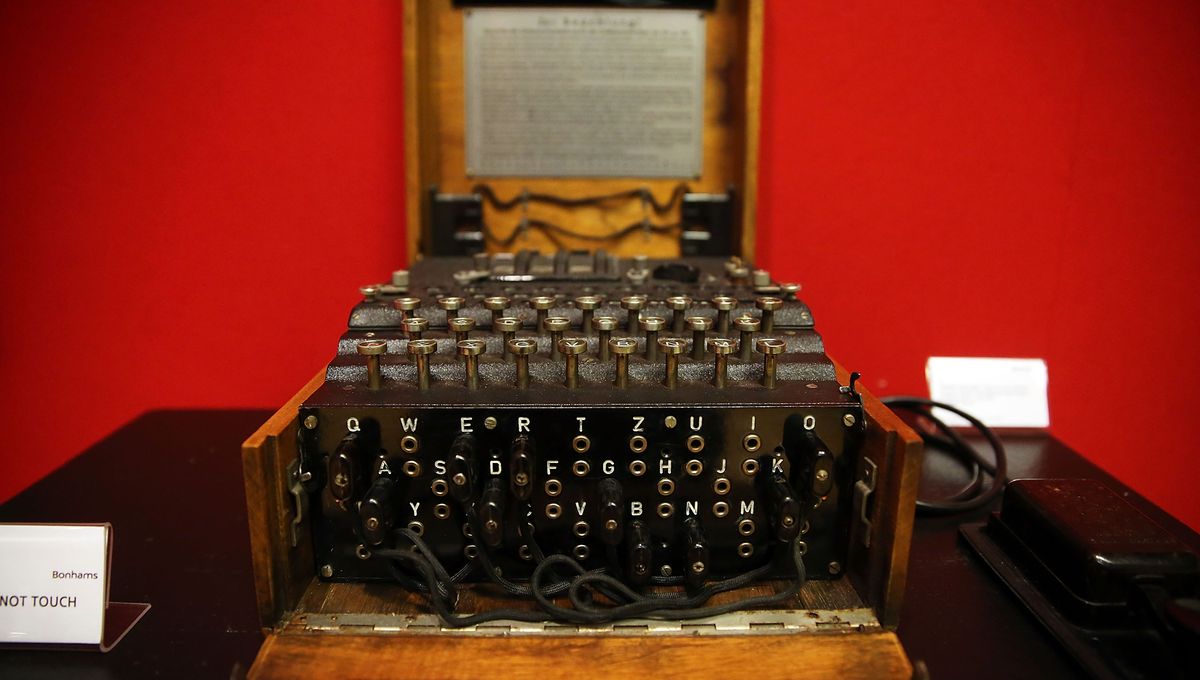
Enigma machine, Second World War.
A timeless principle
The Turing principle is more than just a theory: it is the foundation of modern computing. Through its elegance and power, it has transformed abstract ideas into concrete tools that shape our world. Understanding this principle means understanding how everything from smartphones to supercomputers works.